




Startup founders, let’s talk straight: if your website is not built to be discovered, understood, and trusted by search engines and users, you are leaving visibility, credibility, and qualified demand on the table. SEO is not a quick traffic hack for startups. It is a long-term growth system that helps people find your product, understand your value, and compare you with more established competitors.
SEO is especially useful when it is applied to helpful, people-first content and a technically accessible website. Google’s SEO Starter Guide also emphasizes clear site structure, useful content, descriptive links, and making pages easy for users and search engines to understand.
The stakes? Massive. Every single day, potential customers are searching for solutions—your solutions. And if you’re not on the front page of search results, you might as well not exist. SEO for startups is the megaphone that lets your brand punch above its weight. Yet, too many startups overlook this, focusing instead on splashy campaigns or social media hype that fades without lasting impact.
Here’s the cold truth: building a startup SEO for startup strategy must be gritty, methodical, and, yes, sometimes maddening. But it’s also the most sustainable way to drive traffic, build authority, and convert attention into action. If you’re ready to outshine competitors who haven’t cracked the SEO code yet, let’s dive in.
This is the guide: 10 steps. No fluff. Just bold SEO tips for startups to get your startup seen, heard, and trusted.
Why SEO for startup business is important
For startups, attention is currency, and showing up on search engines is the difference between thriving and fading into obscurity. Your startup can’t afford to ignore SEO. It’s no longer a “nice-to-have”—it’s a need. SEO for startups is the powerhouse that gets your brand seen, trusted, and chosen.
If you believe that SEO consists solely of keyword placement, we’re here to change this. In fact, it’s a strategy and the ultimate leveler for startups taking on industry giants. Let’s dive into why.
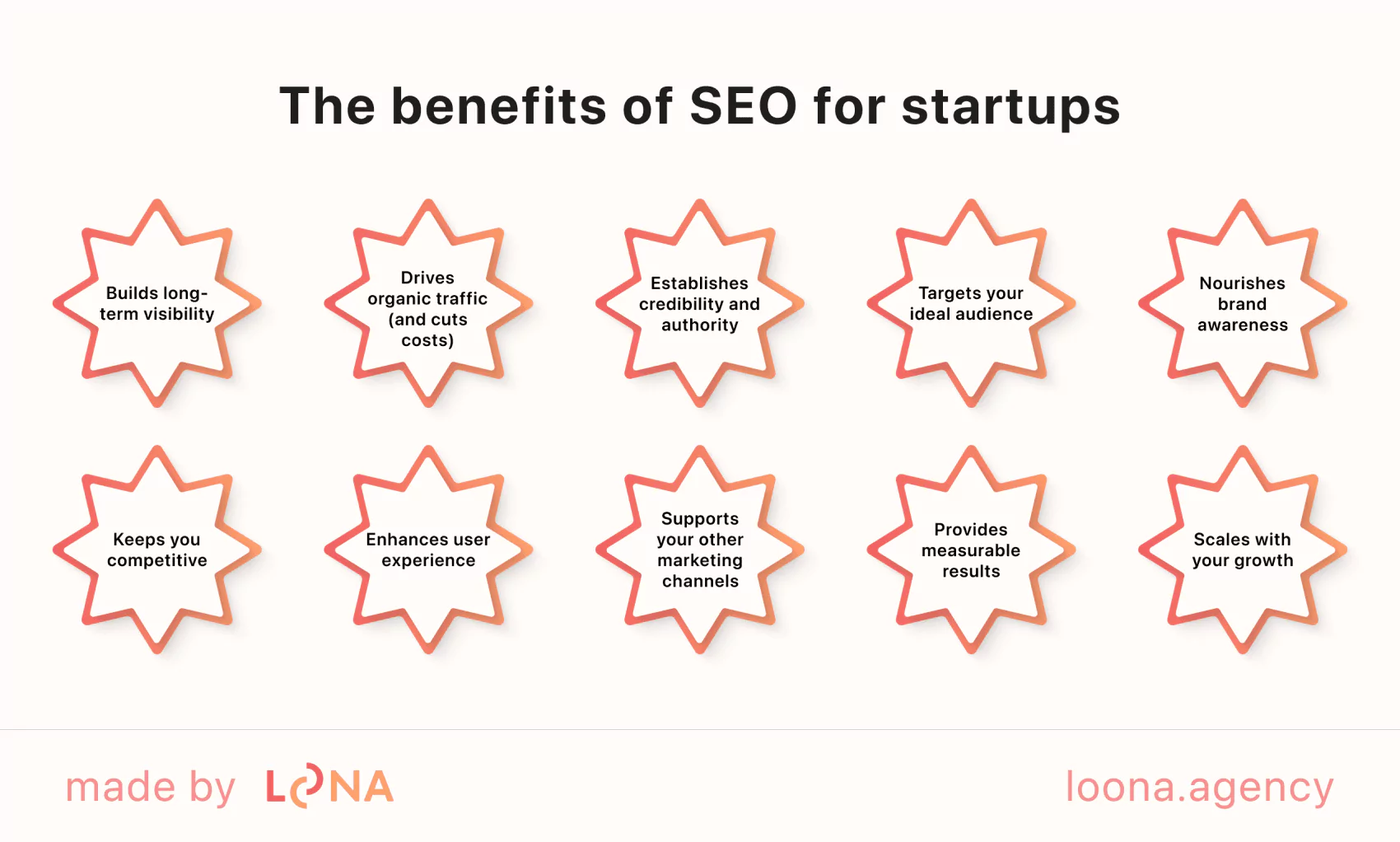
1. Builds long-term visibility
SEO is about being where your audience is, not only about getting a high search engine ranking. Unlike sponsored advertisements that cease as soon as your budget runs out, SEO is an investment that lasts over time. Every optimized blog post, landing page, or product description adds to your online footprint, ensuring your startup continues to gain visibility over time.
2. Drives organic traffic (and cuts costs)
Startups operate on tight budgets, and spending excessively on paid ads can drain resources fast. SEO for startups is a cost-effective way to attract organic traffic. Unlike ads that vanish the moment your budget does, SEO builds an enduring presence, ensuring that your investment keeps delivering results long after. Once optimized, your site can attract visitors 24/7 for free.
3. Establishes credibility and authority
A well-optimized site reaches higher and higher rankings equal trust in the eyes of users. People trust search engines to surface the best options. Higher rankings signal trust, establishing your startup as a reliable and authoritative choice in your niche. This is invaluable when trying to stand out in crowded markets.
4. Targets your ideal audience
Unlike traditional ads, SEO allows you to connect with users actively searching for your product or service. Through keyword optimization, you can ensure your site appears to people ready to take action, making your marketing efforts precise and effective. This means every click has intent, bringing you closer to conversions.
5. Nourishes brand awareness
Even if visitors don’t convert immediately, showing up consistently in search results reinforces your brand’s presence. Appearing consistently in search results plants your brand firmly in the minds of your audience, turning casual browsers into loyal customers. Thus, over time, this repeated exposure builds familiarity and trust, giving your startup a psychological edge over competitors.
6. Keeps you competitive
If you’re not investing in SEO, your competitors are. Startups in your space are optimizing their websites to capture the same audience. SEO for startups is your chance to stay competitive, if not dominate, by ensuring your site outshines competitors on key search terms. Without a strong SEO strategy, you risk losing visibility and potential customers to competitors who are already one step ahead.
7. Enhances user experience
One might think that SEO is only about keywords. However, great SEO isn’t just about keywords. It’s about making your site easy to navigate, fast, and mobile-friendly—all things that improve the user experience. Search engines reward sites that deliver value to users, so improving SEO simultaneously enhances how people interact with your brand.
8. Supports your other marketing channels
SEO strengthens your entire marketing strategy, turning content into a resource for social media, email campaigns, and more. It creates a seamless ecosystem of results. High-ranking pages become valuable assets for email campaigns. SEO doesn’t work in isolation – it amplifies all other efforts, creating a marketing ecosystem that drives results.
9. Provides measurable results
Unlike vague marketing tactics, SEO delivers data. Moreover, SEO delivers clear data—rankings, traffic, conversions—so you can track success, refine strategies, and maximize impact. From keyword rankings to traffic patterns and conversion rates, SEO analytics provide clear insights into what’s working and what’s not, allowing you to tweak your strategy for maximum impact.
10. Scales with your growth
As your startup grows, so do your SEO needs. Whether you’re entering new markets, introducing new products, or targeting broader keywords, your SEO strategy can scale alongside your ambitions. This flexibility makes it an essential pillar of any long-term growth plan.
Every click, conversion, and customer counts when you’re building a business from the ground up. Investing in SEO for startups is not only wise, but also necessary. Optimize now, and reap the rewards for years to come.
10 tips for startups to use SEO
SEO for startups is the secret weapon to level the playing field. Whether you’re bootstrapping or backed by venture capital, these 10 SEO tips for startups will help you harness the power of SEO and differentiate in the digital arena.
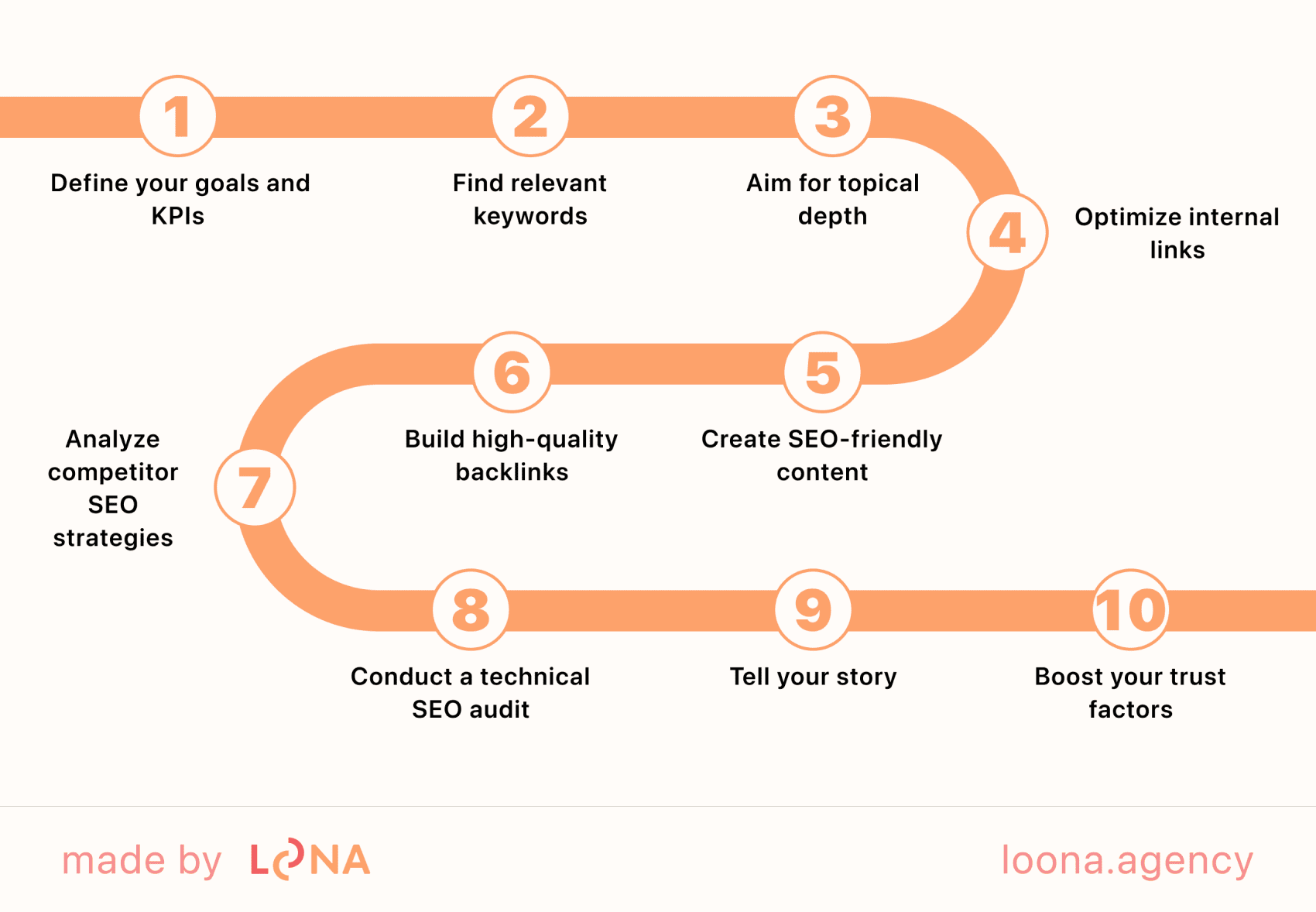
1. Define your goals and KPIs
SEO for a startup company works best when it is tied to a clear business goal. Before choosing keywords or writing content, define what success means: qualified signups, demo requests, product trials, lower customer acquisition cost (CAC), better conversion rates, higher customer lifetime value (CLV), or stronger visibility for a specific product category. Clear KPIs guide every decision, from keyword selection to content strategy.
Think big, but start small. Maybe your first KPI is hitting 5,000 organic visitors in six months. Once you crush that, aim higher. SEO isn’t a one-and-done – it’s a staircase. Each step builds on the last, and tracking KPIs ensures you’re climbing in the right direction.
2. Find relevant keywords
Keywords and well-crafted title tags are the “breadcrumbs” that lead users to your site. For startups, the best opportunities are usually not the broadest keywords, but the queries that match a real product use case, pain point, buyer stage, or niche audience. Start with focused keyword research that balances relevance, difficulty, search intent, and business value.
Search engine marketing (SEM) tool like Ahrefs is your start up SEO allies. Don’t just aim for generic terms like “tech tools.” Instead, go niche: “AI-powered CRM for small businesses.” These are the searches that bring motivated, ready-to-convert users to your site.
3. Aim for topical depth
Surface-level content rarely works for startup SEO. If you are writing about a topic like “how to scale a SaaS startup,” the page should answer the questions a founder, marketer, or product lead would actually ask: what to prioritize, what to avoid, which metrics matter, what examples prove the point, and what next step makes sense.
Dive deep into your niche. Break down complex concepts, add case studies, and provide actionable advice. Demonstrate to search engines and your readers that your content is not only excellent but unique.
4. Optimize internal links
Your site’s internal links are like signposts, helping search engines and people navigate your content. Done right, they boost engagement and keep users clicking. Done wrong, they’re like broken GPS signals—confusing and ineffective.
Startup SEO works better when related pages support each other. Use descriptive anchor text, connect product pages with blog content, link comparison pages to use cases, and create a logical hierarchy that helps users and crawlers understand what matters most. A strong on-page SEO structure can make every new page easier to discover, understand, and evaluate.
5. Create SEO-friendly content
Great SEO content for startups must be crafted to inform, inspire, and convert. Every blog, landing page, and product description should serve a purpose, whether that’s answering questions, solving problems, or closing deals.
Use SEO tools to support structure, readability, topic coverage, and optimization, but do not let tools write the strategy for you. For startups, strong content should explain the problem, show why your solution matters, answer objections, include examples, and guide users toward the next step. People come first; algorithms should be served through clarity, usefulness, and structure.
6. Build high-quality backlinks
Backlinks can support trust and discovery, but startups should focus on relevance and credibility rather than volume. Strong links often come from useful assets: original data, product research, templates, founder insights, partner content, PR, or genuinely helpful tools. Avoid shortcuts that create risk without building real authority.
For link building for startups, aim to collaborate with relevant, authoritative websites. Guest posts, partnerships, or even offering free tools can earn you valuable backlinks that drive both SEO and referral traffic.
Read also: 15 Effective Public Relations Strategies in 2025 (With Examples & Tactics)
7. Analyze competitor SEO strategies
Always keep in mind that your competitors aren’t just rivals—they’re free case studies. Study their strengths and weaknesses to craft your new website SEO strategy. For which keywords do they rank? What is the profile of their backlinks?
Use tools like Semrush to dig into their playbook. Then, do it better. Find gaps they’ve missed, and position your startup as the go-to solution.
8. Conduct a technical SEO audit
A sleek website means nothing if search engines cannot crawl, render, and understand it. A technical SEO audit helps startups check indexation, site speed, mobile usability, internal links, redirects, structured data, duplicate pages, and crawl errors before content investment scales.
Startups often overlook this, but search engine optimization startup tactics start with getting your house in order. If Google loves your site’s structure, so will your audience.
9. Tell your story
Your startup definitely has personality. Personality is what makes you unique among faceless corporations and generic competitors. It’s the blend of your mission, motivation, values, quirks, and the people behind your brand. Make sure you position yourself as the bold innovator with an audacious vision for the future!
Formulate and use your uniqueness, as SEO is about connecting. Infuse that personality into your content, your messaging, and your SEO. Share the struggles and wins that shaped your startup. Talk about the real people advancing your company. Let users see the heart behind the brand.
10. Boost your trust factors
Trust is critical for startups because users may not know your brand yet. Show who is behind the company, what problem you solve, why your product is credible, and what proof supports your claims. Add founder details, customer quotes, case studies, security information, transparent policies, comparison pages, and clear contact options where they matter.
Make yours unforgettable, and weave it into each facet of your SEO approach. Boost your trust factors by securing HTTPS, displaying client testimonials, and showcasing certifications or awards.
Reviews, transparent policies, and consistent messaging also go a long way. SEO strategies for new websites should always include a trust-building component. In an online world full of scams, trust isn’t optional; it’s your strongest currency.
SEO for startups, as well as SEO for tech startups is about building a system—a sustainable, scalable one that grows with your business. Implement these strategies, and you won’t just rank higher; you’ll grow smarter, faster, and stronger.
When do startups need SEO?
The short answer: earlier than most founders think.
From the moment your idea becomes a domain name, SEO should influence how you structure the site, name product pages, plan content, and measure demand. Early SEO does not mean publishing dozens of articles before product-market fit. It means building a crawlable website, creating clear landing pages, validating search demand, and avoiding technical or content debt that becomes expensive later.
Launching a product? Optimized landing pages can drive pre-orders. Building your blog? Targeted keywords attract early adopters. Creating your startup SEO guide from day one ensures every piece of content you produce adds value and ranks higher over time.
Whether you’re in pre-launch, scaling, or pivoting, SEO aligns with every phase of your startup’s journey. It’s your 24/7 salesperson, your credibility builder, and your long-term traffic generator. Start now, refine continuously, and watch your startup grow smarter, faster, and stronger.
Key takeaways
Startup SEO is the foundation of long-term organic visibility. It helps validate demand, build trust, reduce dependency on paid acquisition over time, and create content assets that can support product, sales, and brand growth.
Pay attention to SEO early
Don’t wait—SEO for startup should be a priority from the start. The earlier you invest, the sooner you’ll build visibility and authority.
Invest in a long-term strategy
SEO is about steady progress, not immediate gains. Consistent efforts yield compounding results, driving sustainable growth over time.
Focus on quality over quantity
From content to backlinks, prioritize value and relevance. A few high-quality efforts outperform scattershot approaches.
Adapt and evolve
SEO trends change, and startup markets change even faster. Stay agile, monitor search demand, track conversions, refresh content, and update pages when your product, audience, or positioning changes.
Make SEO part of your brand DNA
Integrate SEO into every aspect of your startup — from product launches and positioning to landing pages, content, and brand strategy. SEO is not just a traffic tactic; it is a way to make your market, message, and product value easier to understand.
SEO requires consistent effort, but the payoff is immense. By making it a priority from the start and integrating it into your core strategy, your startup can secure a competitive edge and achieve sustainable success. Let SEO pave the way for your digital growth.
How to choose a reliable SEO for startup partner?
The right SEO partner should help your startup make better growth decisions, not just publish content or send ranking reports. Start by evaluating whether they understand your market, product stage, sales cycle, technical constraints, and the metrics that matter to your business.
- Look for a team with relevant case studies, transparent reporting, realistic timelines, and a strategy that connects SEO work to traffic quality, conversions, and pipeline.
- A good partner will communicate openly, provide regular updates, and prioritize your business goals over one-size-fits-all tactics.
- Ensure they focus on sustainable practices: technical foundations, useful content, clean internal linking, ethical link acquisition, and continuous optimization instead of shortcuts.
Remember, your SEO partner should feel like an integral part of your team, not merely as an external service provider.
Why Loona is the right choice
Loona stands out as a trusted SEO partner for startups and tech companies, especially in the B2B space. With a dedicated team and personalized approach, Loona excels at driving organic growth through SEO, SMM, and content marketing. We have a proven track record of delivering measurable results—boosting leads, sales, and organic search traffic for our clients.
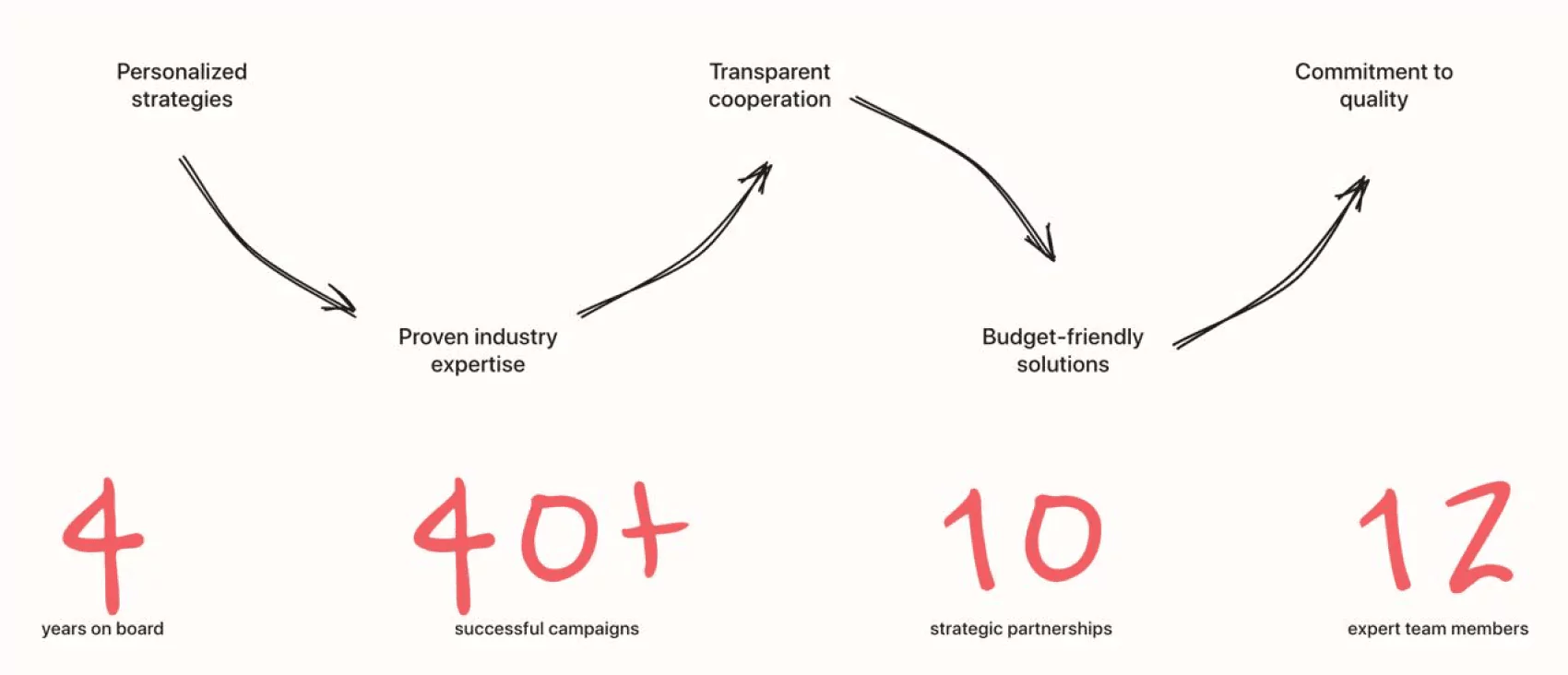
With 40+ successful campaigns over the past 4 years, we are proud of our expertise. Our transparent cooperation model, budget-friendly solutions, and commitment to quality make us a promising choice for your startup. Delegate promotion efforts to us! By partnering with Loona, you gain a strategic ally that lets you focus on refining your core offerings while they optimize your online presence. Check out our portfolio to see how we helped businesses across various industries.
Your growth, our mission.
Conclusion
You’ve followed every SEO for startups step, carefully crafted your SEO strategy, and started seeing the rewards—higher rankings, steady traffic, and growing leads.
But then, something shifts. A subtle algorithm change, a new competitor, or a tweak in user behavior, and your plan needs adjustment. That’s the essence of SEO startups—it’s never static. It’s an opportunity to refine, adapt, and grow. Success in SEO isn’t about finding a fixed solution—it’s about staying curious and flexible in an ever-changing digital landscape.
Wondering how to start SEO for new website or need a new website SEO strategy? Get in touch with us! We anticipate hearing from you to set the base for long-term collaboration and growth.
FAQ
01 Why SEO is important for startups?
SEO is important for startups because it helps potential customers discover your product, understand your value, and compare you with competitors. A strong startup SEO strategy can support organic traffic, brand trust, qualified leads, product education, and long-term growth without relying only on paid acquisition.
02 How much does SEO cost for a startup?
SEO cost for a startup depends on competition, website condition, content needs, technical issues, target markets, and whether you need strategy, writing, technical SEO, link building, or reporting. Early-stage startups can begin with focused audits and priority pages, then scale content and authority building once the foundation is clear.
03 How do startups start SEO?
Startups can begin SEO by fixing technical basics, defining target audiences, researching keywords by intent, creating clear landing pages, publishing useful content, building internal links, measuring conversions, and updating pages as the product and market evolve.
Love what you’re reading? Sign up for our newsletter to get our newest articles, helpful tips, and fresh marketing updates delivered right to you. No spam, just the good stuff.