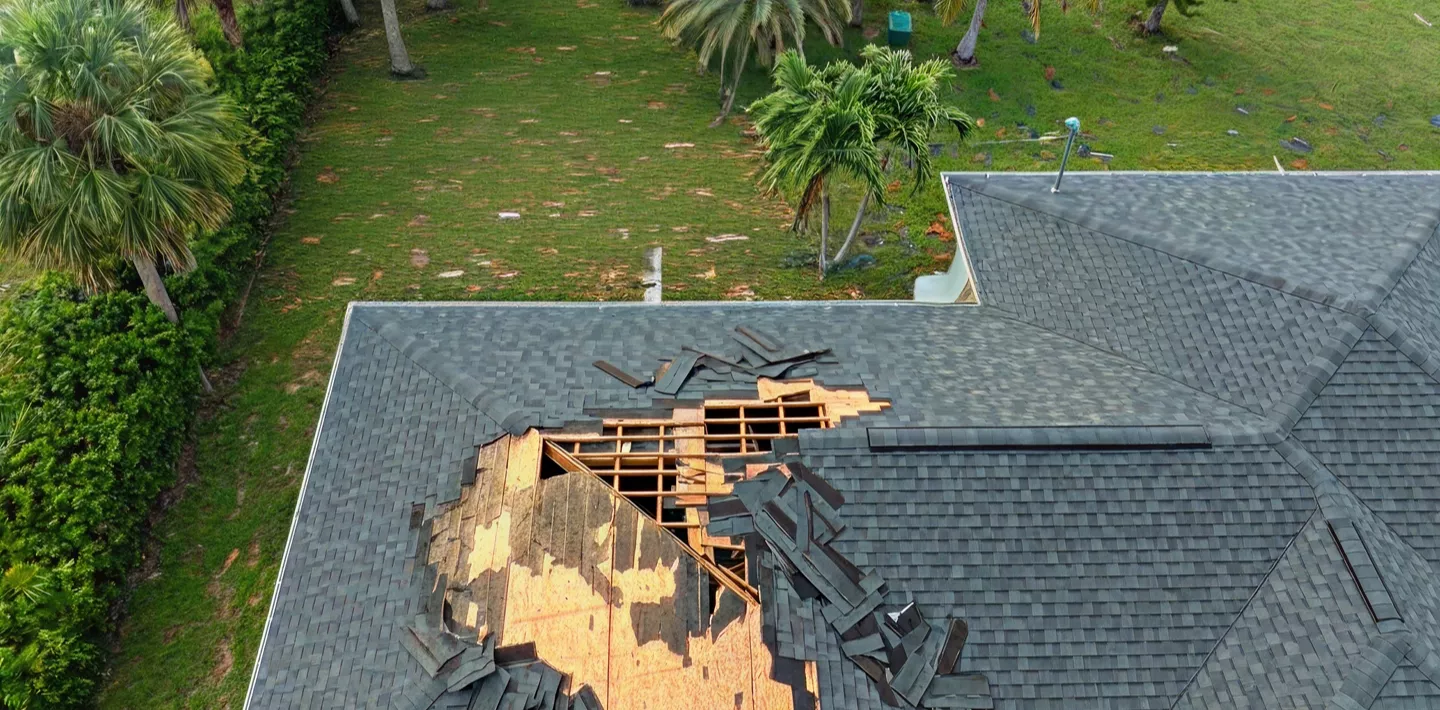




Storm damage roofing marketing strategies work when six moves run together within 48 hours of impact: Google Local Services Ads, geo-targeted PPC and Meta campaigns, door-to-door canvassing on hail-swath maps, direct mail in affected zip codes, review velocity, and five-minute callback discipline. Pre-built beats reactive every single time.
That’s the short answer. The longer one matters because most contractors lose the window — they spend 48 hours building what winners flip on in 48 minutes. A single significant hailstorm can produce tens of thousands of claims in a metro area, and the contractors who answer fastest convert at multiples of the slow ones.
Here’s how the full playbook fits together — starting with the six core moves you need ready before the next storm rolls in.
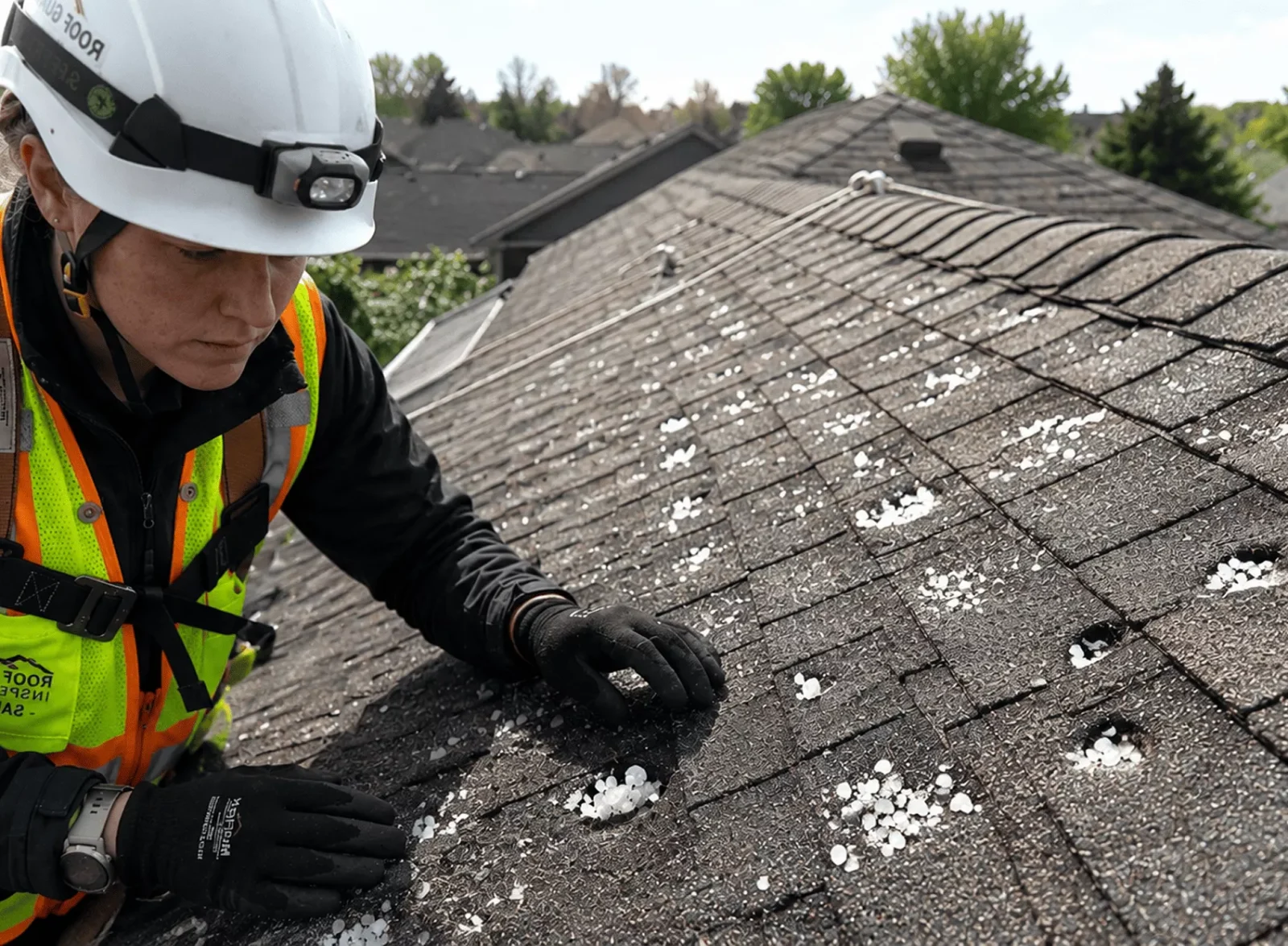
Core storm damage roofing marketing strategies at a glance
A hailstorm rolls through and the clock starts. Homeowners spend the next 24 to 48 hours deciding who gets their roof — and their money. Winning that window isn’t about one magic channel. It’s about six moves running at once.
Here’s what the best storm damage roofing marketing strategies look like on the ground:
- Google Local Services Ads (LSAs) running pay-per-lead in your service zip codes, pre-verified and ready to flip on.
- Geo-targeted PPC and Meta ads with before/after creative pointed at a 5–15 mile radius around the hardest-hit blocks.
- Door-to-door canvassing with trained reps working hail swath maps, not random streets.
- Direct mail in storm-affected zip codes — postcards out the door within 72 hours.
- Social proof and review generation so your Google profile outshines the out-of-state plates parked on the curb.
- Speed-to-response as the unifying principle — every channel dies if you don’t answer in five minutes.
That last one is the whole game. Contractors who respond inside five minutes convert at 2–3x the rate of those who take an hour. Your roofing company marketing strategies can look perfect on paper, but slow callbacks bleed storm damage leads for roofers straight to competitors.
Want these roofing lead generation strategies firing on day one? First, you need to know which neighborhoods were hit — here’s how to find them fast.
How to identify and target storm-affected neighborhoods
Why blanket a whole metro when only six zip codes got pounded? Smart storm damage roofing marketing strategies start with knowing exactly where the hail fell — down to the block.
Build your targeting stack in this order:
- NOAA storm reports and radar tools — the NSSL On-Demand tool maps hail and storm circulations onto satellite imagery for street-level assessment.
- HailTrace for real-time alerts and zip-code-level swath data within hours.
- Interactive Hail Maps for forensic-grade swath overlays confirmed against NOAA reports.
- GAF WeatherHub to search storm history by city or zip for address-specific hail and wind reports.
- HailPoint for address-level impact metrics and population counts per hail size.
Layer in color-scale swath maps to prioritize canvassing — skip yellow zones, deploy crews to red zones showing one-inch-plus hail. Then watch local permit filings. A sudden roofing-permit spike means competitors already know where the action is.
Finish with an automated 24–48 hour alert-to-deploy workflow that fires ads, mail, and canvass routes the moment a storm hits. That speed is typically what separates real local roofing marketing from storm chaser roofing marketing — and it’s how disciplined storm restoration marketing produces roofing company leads after storm events.
Once you know which zip codes were hit, paid ads put your brand in front of those homeowners fast — here’s how to do it profitably.
Paid advertising for storm damage leads
Three paid channels do the heavy lifting in roofing digital marketing after a storm: Google Local Services Ads, search PPC, and geo-targeted Meta campaigns. Each plays a different role. Winners have all three pre-built and ready to flip on within 24 hours.
LSAs are the cheapest trust signal you can buy — Google-verified badge, pay-per-lead, no keyword bidding. Search PPC controls intent keywords like “hail damage roof inspection” but costs more. For how much storm damage roofing PPC costs, expect a wide range driven by competition. Meta ads are the urgency play: before/after creative, geo-fenced radius targeting the hail swath, lead forms qualifying “Are you the homeowner?” to cut out the junk.
| Attribute | Google LSAs | Search PPC | Meta geo-targeted |
| Speed to launch | Fastest | Medium | Fast |
| Trust signal | Google badge | Moderate | Social proof |
| Cost control | Pay per lead | High CPC risk | Lowest CPC |
| Best for | Ready-to-call homeowners | High-intent search | Cold awareness |
Scale spend hardest inside FEMA-declared zones — urgency, claim activity, and conversion rates all peak together there. That said, these roofing advertising strategies only work for emergency roofing services marketing if your phones actually get answered.
Paid ads win leads right after a storm. SEO builds a pipeline that keeps producing long after cleanup — here’s how to set it up.
SEO and local search for long-term storm lead flow
Paid ads stop the second you stop paying. SEO compounds. Strong roofing SEO strategies built before storm season can produce leads for years.
Build a dedicated landing page for every city you serve in the format “[City] storm damage roof repair” — one page per market, with photos, reviews, and the specific neighborhoods you cover. These pages tend to dominate the search surge that hits 48–72 hours after a storm.
Next, lock down Google Business Profile optimization. Set “Roofing Contractor” as your primary category, add four or more secondary categories, keep NAP consistent across every directory, and post weekly. Stack 100+ photos — in most cases it’s the single biggest call-driver on your profile.
Then comes the part most contractors skip: review velocity. A steady monthly drip beats 50 reviews dropped in one week. Want to know how to market a roofing company that wins five years out? Look at Interstate Roofing in Denver — five quiet years of SEO and reviews, then market-leading placement the moment 2023 hail hit.
Track your wins by learning to check your roofing keywords in Google monthly.
Beyond search visibility, the way you frame your message around the insurance process can be the difference between a signed contract and a homeowner who picks up the phone and calls someone else.
Insurance claim marketing: speaking the homeowner’s language
Most homeowners have never filed a roof claim. They’re scared of denial, getting taken advantage of, or overpaying. Your job is to be the calm guide — not the pushy salesman with out-of-state plates.
Lead every ad and landing page with two offers: a free inspection and adjuster meeting support. That’s what converts. You’re not just patching a roof — you’re walking them through documentation, meeting the adjuster on-site, and catching everything that gets missed.
Where legal, zero out-of-pocket framing works, meaning the homeowner pays only their deductible. But Texas, Colorado, and Oklahoma ban any ad offering to waive or absorb deductibles — Colorado treats it as a misdemeanor.
Substantiate every claim before publishing. “Licensed, insured, 15 years experience” needs documentation on file. With the FBI flagging roof fraud as a billion-dollar problem, trust is your sharpest edge. It’s also worth mentioning that insurers are increasingly paying actual cash value instead of replacement cost, so homeowners understand why expert guidance matters more than ever.
Ready to make storm restoration marketing your strongest channel? Get a free estimate and start generating more leads for your construction business today.
With the right message live, the final discipline is knowing whether your spend actually works — and that requires proper tracking from day one.
Measuring ROI on your storm damage marketing spend
If you can’t tell which channel paid for itself, you’re guessing. Real roofing lead generation strategies live or die on closed-loop tracking.
Start with cost-per-lead benchmarks by channel: SEO typically runs $10–$50, LSAs $50–$125, Google Ads $150–$350, exclusive shared leads $200–$350. Then layer in close rate tracking by channel and storm event — referrals close above 50%, post-storm canvassing typically lands 25–35%, cold PPC often comes in at 12–18%. Track revenue-per-storm-event too, since a single hail hit can produce dozens of $8,500–$15,000 jobs.
The plumbing that ties it together? CRM tagging and closed-loop reporting that connects every source to final revenue. ServiceTitan and similar platforms assign campaign-tracking phone numbers so each call maps back to a campaign, a booked job, and dollars collected. Pair that with call tracking and multi-touch attribution — last-click hides the Meta ad that started the whole journey three days before the phone rang.
Segment lead quality by repair versus full replacement. A $400 repair and a $14,000 replacement should never share a cost-per-lead average. Use SEM tools for tracking ad performance to keep spend, volume, conversion, and customer value visible every week. That’s how home service company marketing strategies stop being guesswork.
Numbers tell you what worked — but the patterns across real roofing campaigns reveal why certain moves consistently beat the benchmarks.
What we’ve seen work: lessons from real storm damage campaigns
After working alongside roofing contractors through multiple storm seasons, the patterns get clear fast. The single biggest differentiator isn’t budget — it’s pre-built campaign readiness. The contractors who win have LSAs verified, Meta creative approved, mail lists segmented, and canvass routes mapped before the first hailstone falls. Reactive contractors lose 48 hours building what winners flip on in 48 minutes.
The most common mistake? Betting everything on one channel. A contractor crushing it on Facebook one season gets wiped out the next when ad fatigue hits and costs double. Storm damage leads for roofers come from stacked channels — paid, organic, canvass, mail — running together so no single algorithm change kills the pipeline.
The third lesson is tracking. Contractors who follow leads from source to closed revenue spot which roofing lead generation strategies actually pay. Those tracking only call volume keep funding losers without realizing it.
One more thing: compliance failures — deductible-waiver ads, unsubstantiated claims — destroy reputations faster than any competitor can. As a roofing digital marketing agency, we’ve seen disciplined storm damage roofing marketing strategies turn one hailstorm into a full year of revenue. But only when the prep is done.
Bringing it all together
Storm damage roofing marketing strategies aren’t about finding one channel that prints money. They’re about stacking six moves — LSAs, geo-targeted PPC and Meta, canvassing, mail, review velocity, and five-minute callback discipline — and firing them inside 48 hours of impact. Pre-built beats reactive every time.
The contractors who win share three habits: they prep before the storm hits, they answer the phone in five minutes, and they track every lead from source to closed revenue. Skip any one of those and you’ll keep funding losers without knowing it.
Storm season won’t wait. Will your campaigns be verified, approved, and ready to flip on when the next hail line moves through your zip codes?
Get a free estimate and start generating more leads for your construction business today — so the next storm builds your year instead of someone else’s.
FAQ
01 How much do storm damage roofing leads cost on average?
Google LSAs typically run $50–$120 per lead. Search PPC averages $150–$350, but can drop to $30–$70 during peak post-storm windows with pre-built campaigns. Shared platforms like Angi charge $75–$150; exclusive leads run $200–$350. Door-to-door canvassing hits $3–$10 per lead when crews work hail-map zones.
02 What is the fastest way to get roofing leads after a storm?
Google Local Services Ads launch fastest and carry the Google Guarantee badge. Pre-built PPC and Meta campaigns can flip on within hours. Door-to-door canvassing in hail-mapped zip codes generates same-day leads. EDDM postcards mailed within 24–72 hours catch homeowners before they even start searching.
03 How do roofing companies legally market insurance claim services?
Offer free inspections with documented photo reports. Position yourself as a guide through the claims process, not a payout guarantor. Never offer to waive or absorb deductibles — it's illegal in most states. Avoid "no cost to you" language unless you've verified it's compliant in your market. Check with your state licensing board first.
04 What’s the difference between storm chaser and local roofing marketing?
Storm chasers are often out-of-state crews using high-pressure tactics after a storm, then disappearing once the work is done. Local marketing builds long-term trust through SEO, reviews, and community presence. Ethical storm response means licensed, branded, trained crews who stay reachable for warranty work and post-job issues.
05 Which digital marketing channels work best for storm restoration?
Google LSAs deliver the best speed-to-trust-to-cost balance. Search PPC wins high-intent keywords when campaigns are pre-built. Meta geo-targeted ads drive awareness with before/after creative. Local SEO and Google Business Profile produce leads between storms. Direct mail reaches homeowners who haven't started searching yet.
Love what you’re reading? Sign up for our newsletter to get our newest articles, helpful tips, and fresh marketing updates delivered right to you. No spam, just the good stuff.