



Remodeling leads come from two places: channels you own, like referrals, your Google Business Profile and project pages, and channels you rent, like Local Services Ads, search ads, and shared marketplaces. Owned channels charge no per-lead fee, while one 2026 vendor report prices shared kitchen leads at $150–$600+ each. Even so, cost per lead is the wrong number to judge them by.
Demand isn’t the problem. The 2026 Houzz & Home Study found 91% of renovating homeowners hired at least one pro, though planned median spend fell to $15,000. With budgets tighter, remodelers who keep a full backlog do three things: track cost per signed project, answer within minutes, and own their lead flow.
This guide covers eight sources, price ranges by source, the math behind a signed job, and a checklist for deciding whether to buy leads. First, let’s pin down what counts as a remodeling lead.
What Сounts as a Remodeling Lead?
A remodeling lead is a homeowner with a real project who has asked you, or a platform, for an estimate. The demand is there. The 2026 Houzz & Home Study found that 54% of homeowners renovated in 2025, and 91% of them hired at least one pro. Median planned spend for 2026 fell to $15,000.
Inquiry volume is holding steady rather than climbing. NAHB’s Q3 2026 leads and inquiries component sat at 53, according to HousingWire’s RMI coverage. That’s barely above the 50 line where good and poor reports balance out.
In a flat market, the best remodeling leads tend to come from referrals, your Google Business Profile and Map Pack, Local Services Ads, and search ads. These home remodeling leads usually reach you directly, often before a competitor even knows the project exists.
Shared marketplace leads work differently. One 2026 vendor report (Kitchen Remodeling SEO, 15 US markets) puts third-party kitchen leads at $150–$600+ each, usually sold to 3–5 contractors. Other sources quote lower prices, so verify rates in your own market.
Before you spend on any home improvement marketing, define what qualifies. Home improvement leads only count as remodeling leads if the person owns the home and has a scope, a budget range, and a timeline.
Once you know what a lead is, the next question is who else is getting the same one.
Shared vs Exclusive Remodeling Leads
Shared leads put you in a race. The same homeowner hears from several remodelers within minutes, and the fastest or cheapest one usually wins the estimate.
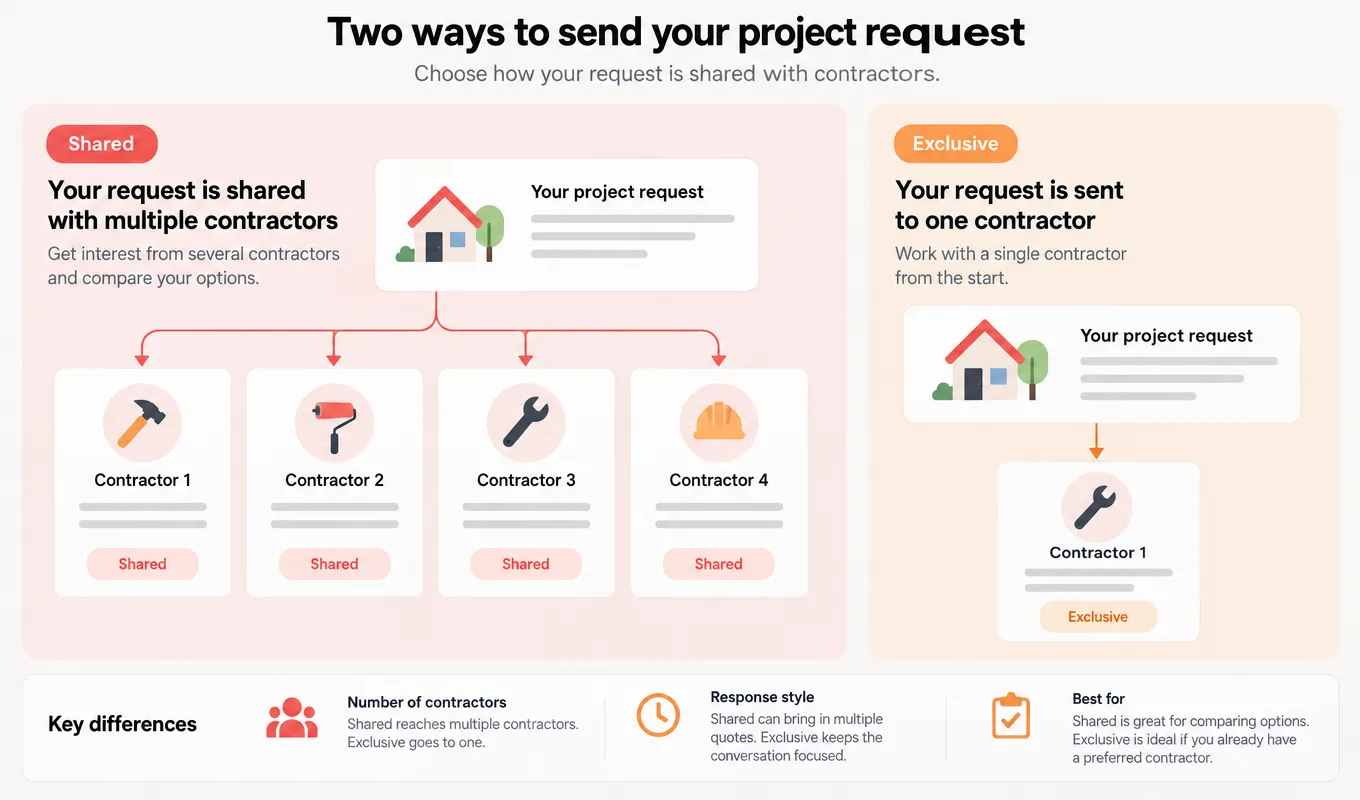
One 2026 vendor report puts shared remodeling leads at 3–5 contractors each, which is the model behind most Angi leads. You pay less per lead, but you compete on speed and price instead of fit.
Exclusive remodeling leads are sold once. That removes the race, but not the screening. A single-buyer lead can still be a renter, an early researcher, or a homeowner pricing a full gut on a cosmetic budget.
Treat vendor quality claims with caution. In 2023, the FTC’s HomeAdvisor order barred the company from making false claims about its leads, including that homeowners were ready to hire. HomeAdvisor settled without admitting liability.
| Attribute | Shared leads | Exclusive leads |
|---|---|---|
| Buyers per lead | 3–5 contractors | One contractor |
| Price per lead | Lower | Higher |
| Main pressure | Speed and price | Qualification |
| Needs screening | Yes | Yes |
Before you buy remodeling leads, ask how many contractors get each one and how refunds work. For exclusive kitchen remodeling leads, confirm ownership, scope, budget, and timeline on the first call.
With the shared-versus-exclusive trade-off clear, here are eight places remodelers actually find leads.
Where Remodelers Get Leads: 8 Sources Compared
Most remodelers draw from eight places. The mix, not the count, is what separates full backlogs from thin ones.
- Referrals and past clients: owned, no fee, best close rate
- Google Business Profile and Map Pack: owned, free, drives calls
- SEO project and service pages: owned, slow, compounds
- Local Services Ads: rented, per lead, disputes allowed
- Google Search Ads: rented, per click, catches active demand
- Meta project-photo ads: rented, creates demand, needs nurture
- Houzz Pro, Angi, Thumbtack: rented, subscription or per-lead, often shared
- Realtors, designers, suppliers: owned relationships, uneven volume
Our view is that owning beats renting shared leads. Marketplace leads look cheap, but you end up racing rivals on price and speed. Owned leads arrive first, already pre-sold by your photos and reviews.
Wondering how to get remodeling leads steadily? Run LSAs and search ads to fill gaps while your owned channels mature. Let the owned sources carry the base, and judge each one by signed projects, not calls. Start with the cheapest, best-closing source.
Referrals & Past Clients
Referrals are the cheapest remodeling leads you’ll get, and the easiest to close. The homeowner arrives already trusting you because a neighbor or friend vouched for your work.
The catch is that referrals rarely happen on their own. Build a referral program around a completion ask. At the final walkthrough, when the client is happiest, ask who else they know is planning a project.
Then stay in touch. A check-in at 6 and 12 months, plus a thank-you gift for every referral, keeps your name top of mind. Log each referral source in your CRM.
Next is the channel that catches homeowners searching nearby.
Google Business Profile & Map Pack
Your Google Business Profile sends remodeling leads without a per-lead fee. When a homeowner searches “kitchen remodeler near me,” the Map Pack shows three local companies above the regular results.
Getting in is mostly setup work. Choose “Kitchen remodeler” as your primary category and add secondary ones like “Bathroom remodeler” or “Siding contractor.” List the towns you actually serve, not your whole state.
After that, keep the profile active. Upload finished-project photos often and ask for a review after every job, since homeowners compare recent reviews before they call.
Your website pages are what the profile points to.
SEO project and service pages
Service pages and finished-project pages give you leads you own. A service page targets one job in one area, like “bathroom remodeling in Walnut Creek.” A project page shows a finished kitchen with photos, scope, and the town.
Homeowners and Google both reward that local detail. SEO for remodelers takes months to gain traction, then keeps sending remodeling leads with no cost per click.
It compounds. Per our client data, American Building Development earned $585K in organic revenue in 11 months.
Plum ProExteriors grew the same way, one project page at a time. If you need leads faster than SEO can deliver them, Google’s paid local product is next.
Google Local Services Ads
Google Local Services Ads appear above search ads and the Map Pack. You pay per lead, not per click, so a browser who never calls costs you nothing.
Pass Google’s background and license checks, and you earn the Google Guaranteed badge. Homeowners notice that trust signal before they call.
If a lead is spam, out of your area, or for work you don’t do, dispute it in the dashboard. SearchLight Digital reported a 43.9% book rate for home services LSAs in February 2026.
Use Local Services Ads to add remodeling leads quickly while your owned channels mature. Search ads capture the same intent, with more control.
Google Search Ads
Google Search Ads catch homeowners at the moment they type “bathroom remodel near me.” You pay per click, set your own budget, and see exactly which keywords turn into calls.
That control has a price. LocaliQ’s 2025 benchmarks for Construction & Contractors put the average click at $5.31, the conversion rate at 2.61%, and cost per lead at $165.67, the third-highest of 16 home service trades. Judge it by signed projects, not CPL.
Tight keyword lists, negative keywords, and call tracking help keep remodeling leads affordable. Check current Google Ads costs before setting a budget.
Meta works the opposite way: it creates demand instead of capturing it.
Meta Ads with Project Photos
Meta ads with before/after project photos reach homeowners who aren’t searching yet. Picture one scrolling at night who sees a dated 1990s kitchen turned bright and open a few miles away, and starts imagining their own.
That’s demand creation, not demand capture. Many people who fill out a Meta form are months from signing, so quality is uneven. Real buyers arrive mixed with early researchers and people who forget they clicked.
Plan for a longer nurture. Call fast, then send project photos, reviews, and a design-visit offer over several weeks. Track which remodeling leads reach an estimate before you scale spend. Marketplaces sit between paid and shared models.
Houzz and Angi/Thumbtack Marketplaces
Houzz Pro, Angi, and Thumbtack give you access to homeowners already shopping for a contractor. Houzz Pro runs mostly on a monthly subscription tied to your profile and area. Angi and Thumbtack lean toward pay-per-lead, with prices set by job type and market.
Some remodeling leads go to one contractor, and many go to several. Quality ranges from ready buyers to wrong numbers.
Treat marketplaces as a gap filler for remodeling company online leads, not the base. Ask how many pros get each lead, call within minutes, and log every signed project by source. Last, local relationships can feed you work without any ad spend.
Local Partners: Realtors, Designers, Suppliers
Realtors, designers, and cabinet and tile suppliers meet homeowners before you do. A Realtor sees sellers fixing a dated bath before listing and buyers gutting the kitchen after closing. Designers need a builder they trust. Suppliers get asked “who installs this?” every week.
These remodeling leads arrive warm, but etiquette decides whether they keep coming. Call every referral the same day, report back to the partner, and never undercut their pricing or poach their clients. Check your state’s rules before offering a Realtor any referral fee.
Tag each partner as a lead source in your CRM, then compare signed projects quarterly. Now to what each of these sources actually costs.
What Remodeling Leads Cost by Source
Remodeling contractor leads run $45–$600+, depending on source, job, and market.
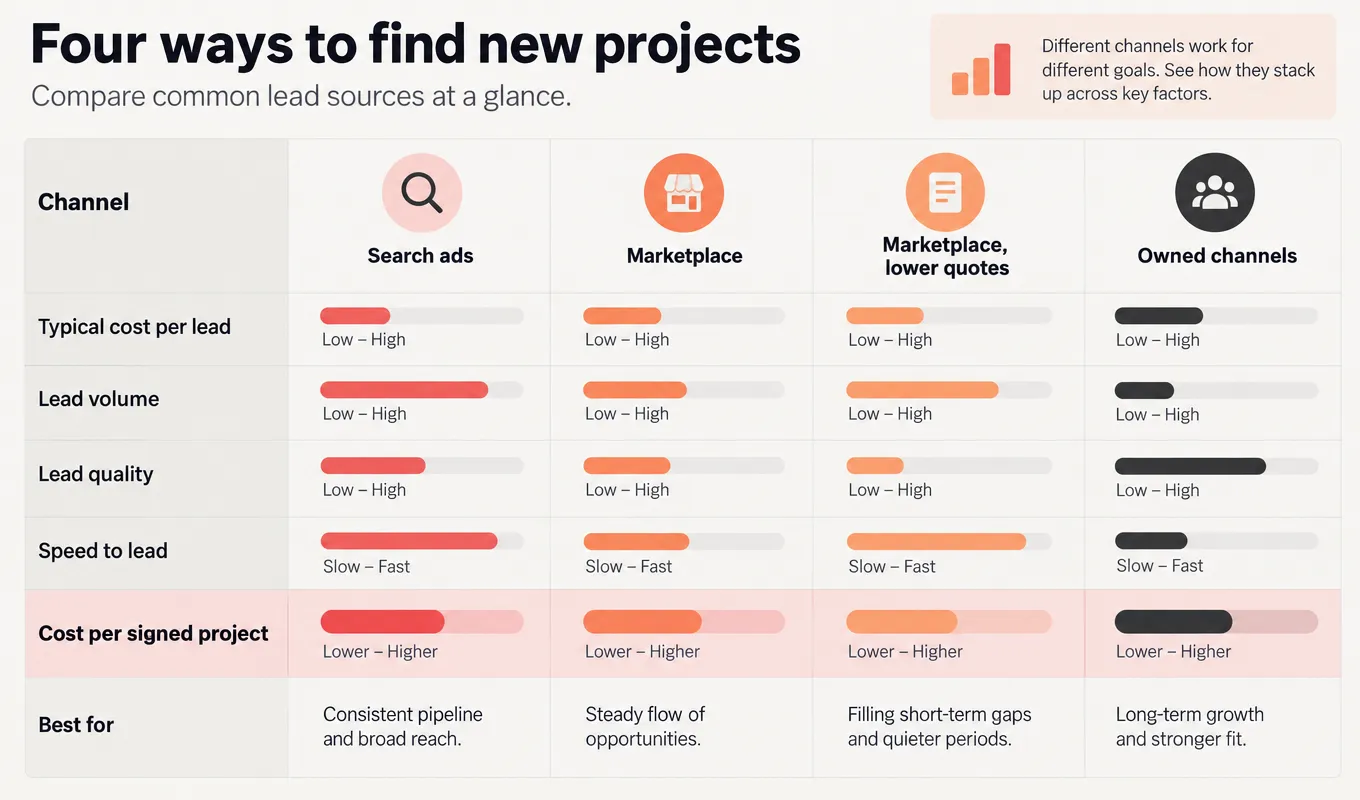
LocaliQ’s 2025 data puts Construction & Contractors search ads at $165.67 per lead, versus $90.92 for home services overall, up 10.51% year over year.
Marketplace remodeling leads are murkier, because the quotes conflict. A 2026 vendor report says $150–$600+, shared with 3–5 contractors. Another lists platform kitchen leads at $45–$150.
Owned leads for remodeling cost you setup time, not fees.
| Attribute | Google Search Ads | Marketplace (vendor report) | Marketplace (lower quotes) | Owned channels |
|---|---|---|---|---|
| Cost per lead | $165.67 benchmark | $150–$600+ kitchen | $45–$150 kitchen | No per-lead fee |
| Data type | LocaliQ benchmark | Vendor data | Vendor guide | Your own tracking |
| Buyers per lead | One | Often 3–5 | Varies | One |
Ask sellers what exclusive bathroom remodeling leads cost locally.
Cost per lead misleads. Compare cost per signed project instead.
Cost Per Lead vs cost Per Signed project
A cheap lead isn’t cheap if it never signs. Track cost per signed project:
cost per signed project = cost per lead ÷ close rate
Angi’s 2026 data puts the average kitchen at $26,945 and the average bath at $12,146. Compare a $150 shared lead (the vendor low end) with LocaliQ’s $165.67 search lead. The close rates below are contractor-guide planning assumptions, not audited data, so swap in your own.
share of ticket = cost per signed project ÷ project price × 100
| Attribute | Shared marketplace lead | Own-channel search lead |
|---|---|---|
| Cost per lead | $150 (vendor low end) | $165.67 (LocaliQ) |
| Assumed close rate | 5–12% | 25–40% |
| Cost per signed project | $1,250–$3,000 | $414–$663 |
| Share of kitchen ticket | 4.6–11.1% | 1.5–2.5% |
| Share of bath ticket | 10.3–24.7% | 3.4–5.5% |
The pricier lead wins. Shared bath leads can eat nearly a quarter of the ticket. Tag last year’s signed projects by source, then run the same math on your remodeling leads.
Kitchen And Bath Remodeling Leads: What Changes
Kitchen and bath remodeling leads look alike in your CRM, but they behave differently once you call. The Houzz & Home Study 2026 put the 2025 median kitchen spend at $24,000 and primary bathroom spend at $15,000.
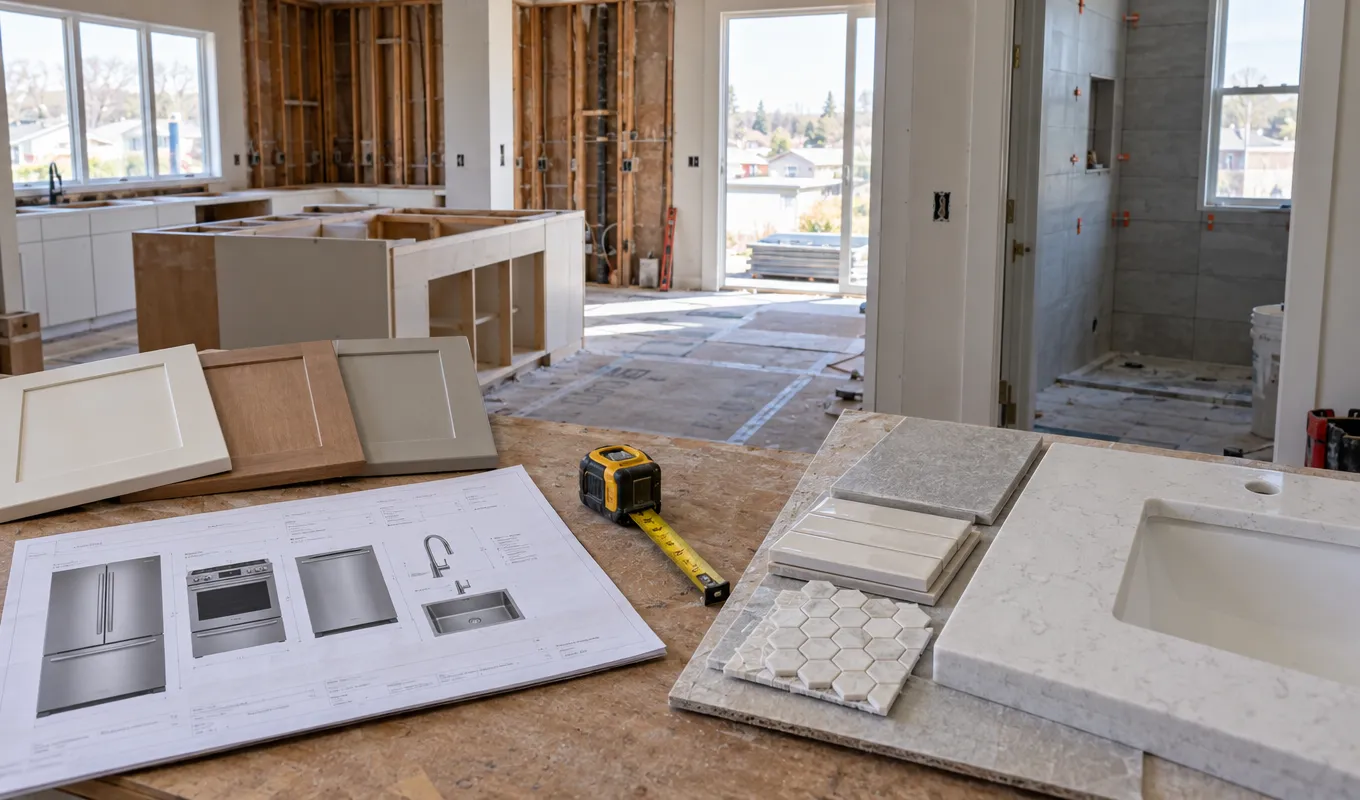
Kitchen remodeling leads are bigger and slower. Homeowners want a design visit, layout options, cabinet and appliance choices, and often a second meeting with a spouse. Plan your follow-up in weeks, not days.
Bathroom remodeling leads move faster. The scope is tighter, and homeowners compare quotes line by line, so price and speed carry more weight. A clean estimate delivered quickly often wins the job.
For either job type, qualify on the first call with four questions:
- Ownership: Do you own the home?
- Scope: Is it a refresh, or are plumbing and walls moving?
- Budget: Do you have a range, and does it match the scope?
- Timeline: Are you ready to start within a few months, or still researching?
If you buy kitchen remodeling leads, ask the seller which of these answers the lead form captures. Bath remodeling leads that arrive with no budget answer often signal a price shopper.
Whatever the lead type, you only profit if you convert it.
How to Convert More Remodeling Leads
Most remodelers blame price when a job slips away. We believe silence loses more deals than price does. The homeowner called, waited, heard from someone else, and signed with the contractor who stayed in touch.
That makes conversion a process problem, not a sales-talent problem. Four leaks cause most of the damage:
- Response: calls go to voicemail and web forms sit until evening.
- Follow-up: an estimate goes out, then nothing happens for two weeks.
- Proof: thin reviews and old photos make the homeowner hesitate.
- Tracking: you can’t see which source or step loses the job.
Find your biggest leak before you buy more remodeling leads. Pull your last 50 inquiries and mark where each one stopped: no contact, no estimate, estimate sent with no reply, or lost on price. Then run two numbers:
contact rate = leads reached ÷ total leads × 100
estimate close rate = signed projects ÷ estimates sent × 100
If your contact rate is low, fix response. If estimates stall, fix follow-up. Only “lost on price” points at your pricing, and it’s often the smallest bucket.
Fix the biggest leak first, and the same lead spend produces more signed projects.
Speed comes first.
Speed to Lead
Speed is the cheapest conversion fix you have. Harvard Business Review’s 2011 study of 2,241 US firms found that companies trying to reach a web lead within an hour were about 7x as likely to qualify it as those that waited an hour longer. The average response time was 42 hours, and 23% never responded.
Aim for minutes, not hours. Set up missed-call text-back so every unanswered call gets an instant reply with a booking link. Route evening and weekend forms to an answering service or an on-call estimator.
Remodeling leads cool fast once a competitor calls first.
Fast contact has to be followed by persistence after the estimate.
Follow-up on Open Estimates
An estimate with no follow-up is a quote for your competitor. Homeowners comparing several remodelers rarely call back first, so the next move is yours.
Build an estimate follow-up cadence that runs for weeks and changes the touch each time:
- Day 1: call to walk through the estimate and answer questions.
- Follow up with a text sharing a finished-project photo similar to their job.
- Day 7: email a recent review from a nearby client.
- After a couple of weeks, call about upcoming schedule openings.
- Day 30: send a final check-in, then move them to a monthly list.
Log each touch in your CRM so nothing slips.
Proof of past work backs up every follow-up.
Reviews & Photo Portfolio
Homeowners check you out before they call. They scan your recent reviews, then click through finished-project photos to see whether your kitchens look like the one they want.
Stale proof hurts. A wall of reviews from three years ago suggests a company that slowed down.
Make the review ask part of closeout. At the final walkthrough, text the client a direct link and ask them to mention the room and town. This guide to Google reviews walks through the setup. Photograph every finished job before you leave the site, then post it to your profile and project pages.
Finally, measure what all this produces.
Tracking Cost Per Signed pPoject
Cost per lead tells you what a call costs. It doesn’t tell you what a call earned. Pipeline value by channel does.
Our approach starts with GA4 and Google Tag Manager call and form tracking, so each inquiry carries its source. Then connect that source in your CRM to the signed contract.
cost per signed project = channel spend ÷ signed projects from channel
pipeline value = open estimates × average project price × close rate
The channel with the worst CPL often produces the cheapest signed projects from remodeling leads.
With tracking in place, you can decide whether buying leads makes sense.
Should You Buy Remodeling Leads? A Checklist
Buying remodeling leads can fill a thin month or test a new service area. It shouldn’t carry your whole backlog. Our view: own-channel flow is the base, and bought leads fill gaps.
Run this checklist before you sign up:
- Sharing: How many contractors get each lead? Most contractor leads home improvement platforms sell go to several companies.
- Response: Can someone call every lead within minutes, evenings included?
- Lead refund policy checkpoint: What qualifies for a credit, how fast must you flag it, and do you get cash or store credit? Several platforms issue account credit, not refunds, and only for leads you flag promptly.
- Tracking: Can you tag each lead by source in your CRM through to the signed contract?
- Math: Does cost per signed project stay inside your marketing budget at your real close rate?
- Exit: Can you pause or cancel without a long contract?
If you answer no to two or more, fix those first. Then shift spend toward how to get remodeling leads you own: reviews, your Google Business Profile, and project pages.
If you’d rather build that base than keep renting it, get a free estimate and start generating more leads for your construction business today.
Here is what we see in practice when remodelers make this choice.
What We See in Remodelers’ Lead Data: Shared leads vs Own channels
These are practitioner observations on lead source vs signed-project cost, drawn from remodeling accounts where call and form tracking runs through to signed contracts. They’re patterns, not benchmarks. Your numbers will differ.
Shared leads rarely lose on cost per lead. They lose on cost per signed project. The same homeowner hears from several remodelers, the estimate becomes a price comparison, and the contractor who spent the most time on the bid often doesn’t win.
Response time matters more than most owners expect. On shared leads, the job is often gone once a competitor reaches the homeowner first. On own-channel leads, a slower reply costs less, because the homeowner already chose you after seeing your photos and reviews.
When contractors move from shared leads to their own channels, the change usually follows this pattern:
- In the first few months, lead volume dips as marketplace spend drops and owned channels warm up.
- Cost per lead often rises, which worries owners who track only CPL.
- Close rates climb as more callers mention a project photo, a review, or a referral by name.
- Cost per signed project falls, and the backlog steadies.
The view here is simple: expect the dip and keep going. Cut shared spend in stages, not all at once, and compare signed projects by source every month. Remodeling leads you own get cheaper the longer those channels run.
Build Remodeling Leads You Own
Remodeling leads aren’t all equal. A shared marketplace lead can look cheap and still cost more per signed project than a pricier search lead, because you’re racing other remodelers on speed and price.
The fix is a system, not a single channel. Make referrals, your Google Business Profile, and project pages your base. Use LSAs and search ads for active demand, and treat marketplaces as gap fillers. Then answer within minutes and follow up on every open estimate for weeks.
Judge each source by signed projects and pipeline value, not cost per lead. Start this week: tag your last 50 inquiries by source and outcome, then fix the biggest leak first.
For step-by-step guides on tracking, reviews, and local ads, browse the remodeling marketing blog.
Want proof that owned channels pay off? These remodeler case studies show how exterior contractors built steady organic revenue one project page at a time.
Ready to stop renting your backlog? Talk to a specialist to get a free estimate and start generating more leads for your construction business today.
FAQ
01 How do I get remodeling leads without Angi?
Build channels you own: a past-client referral program, your Google Business Profile and project pages, plus LSAs and search ads for active demand. Add Realtors, designers and suppliers as partners, then track signed revenue by source.
02 How much do remodeling leads cost?
It depends on the source. LocaliQ's 2025 benchmark puts contractor search-ad leads at $165.67, and one 2026 vendor report prices shared kitchen leads at $150–$600+. Referrals cost least. Verify prices in your own market.
03 Are exclusive remodeling leads worth it?
Only if they're qualified and the price still works at your close rate. "Exclusive" means different things to different vendors, so get the terms in writing and check the refund policy before you pay.
04 What is the best lead source for kitchen and bath remodelers?
Referrals and your Google Business Profile usually close best, because homeowners arrive already trusting your work. Add LSAs and search ads for speed, and use marketplaces only to fill gaps.
05 How fast should I respond to a remodeling lead?
Within minutes. Harvard Business Review's 2011 study found firms that tried to reach web leads within an hour were about 7x as likely to qualify them as firms that waited an hour longer. Set up missed-call text-back and after-hours coverage.
06 Is SEO or Google Ads better for remodeling leads?
Ads deliver leads fast, but LocaliQ's 2025 benchmark puts contractor cost per lead at $165.67. SEO builds slowly, then keeps sending leads without click costs. Most remodelers need both, with SEO as the base.
Love what you’re reading? Sign up for our newsletter to get our newest articles, helpful tips, and fresh marketing updates delivered right to you. No spam, just the good stuff.